E-NEWS
Sign up for updates on grants, events, and more

DONATE TODAY
Make one donation
Help hundreds of organizations
Change thousands of lives
Frequently Asked Questions about Planned Giving for LGBT People


  1. Why plan now?
  2. How should I start?
  3. What are the most common ways to give through estate planning?
  4. I already have an estate plan. How can I include the LGBT community?
  5. I care about the LGBT community, but I'm not sure what to support.
    How can my gift have the most impact?
  6. Can Horizons help me plan in other ways?
  7. Is there sample bequest language I can use?
  8. How can I get further information?

   
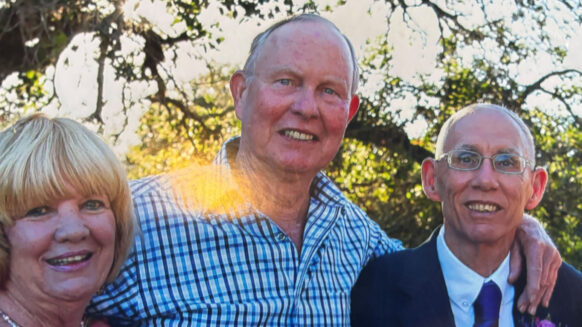
I'm very confident in Horizons - I feel it's very well run, it's deep, and there's a solid board that's managing and monitoring this. And as succession occurs, it's going to [keep being] done properly. I love that Horizons is seeing lots of things that I would never see on my own [and sorting out] the productive from the less productive opportunities.

Legacy Circle member


1) Why plan now?
Let's face it: many of us put off estate planning. Maybe we do because it seems very complicated. Or maybe we're afraid that it will make us think about death. But estate planning doesn't have to be complicated at all. And, far from being somber, it's really about taking control over your own life and legacy - and providing for who and what you love.

Not planning, of course, means letting someone else plan for you. And, in estate planning, that means the government's plan. If you are like most LGBT people, the government's plan is likely to be very different from what you would want. The state will not necessarily recognize your partner, your family or friends, or causes you care about - unless you take action. In fact, without the right planning, only the state or legal relatives - no matter how distant - would determine the disposition of your assets, or even make fundamental medical, legal, and financial decisions if you become incapacitated prior to your death.

Estate planning, in the end, is an opportunity. It's an opportunity to protect assets for you and those you love. It's an opportunity to give back to your community. It's an opportunity to ensure that your legacy reflects your life's work, your values, and your commitments. For LGBT people, it can be an opportunity to help create a world free of the discrimination and isolation that so many of us have experienced. Quite simply, with a plan in place, you write your own legacy.


2) How should I start?
For the great majority of us, estate planning doesn't need to be extremely complex. Here are the steps to take to create a basic estate plan that includes the people, causes, and organizations that mean the most to you:

  1. Make a preliminary plan
    Think about what you would like your bequests to accomplish. You may find it helpful to write a brief statement of personal and charitable goals. Decide whom and what you would like to benefit from your estate. Also think about who you would like to make medical, financial, or other important decisions if you became incapacitated.
     
  2. Take stock
    Make an inventory of your assets.
     
  3. Get an attorney
    Identify an attorney who regularly drafts trusts, wills, and other estate plans for LGBT people. If you don't have an attorney, ask friends for references. You can also refer to the listings and information about estate planning attorneys in the Horizons Foundation Directory of Professional Advisors for the LGBT Community. Most attorneys will not charge for an initial discussion and can give you an estimate of the time and cost involved to draft your estate plan.
     
  4. Include the LGBT community in your plans
    Many people are able to make their most generous gifts out of their estates - gifts that can have a tremendous impact on a cause or organization you care about. If being part of the LGBT community has been an important part of your life, consider making a gift to one or more organizations that serve and advocate for LGBT people. Or you can designate a gift to the LGBT Community Endowment Fund of Horizons Foundation, which ensures that your legacy will help provide for future generations of LGBT people.
     
  5. Let the charitable beneficiaries know about your gifts
    Contact the charities you wish to include and ask them to provide you with sample bequest language, their legal names, and tax ID numbers to share with your attorney. Tell the charities about your plans to let them say thanks to you directly.
     
  6. Inspire others
    If you are comfortable doing so, share with friends and family the gifts you are planning for the community. Your example may well inspire others to make gift provisions in their plans.

3) What are the most common ways to give through estate planning?
Horizons Foundation offers several ways for you to make planned gifts that provide for your loved ones - and your community. The following is a summary list of some of the most common and most useful ways.

  1. Living trusts and wills
    You can leave a percentage of your estate, a fixed amount, or a residual bequest (the amount left after gifts to loved ones or charity have been made) to the LGBT Community Endowment Fund or to an LGBT organization.
     
  2. Retirement plans and life insurance
    Naming Horizons as the beneficiary of your life insurance, 401(k), 403(b), IRA, or other retirement plan is a highly tax-efficient and powerful way to provide for the LGBT community. Retirement plan assets left to an heir can be subject to taxes as high as 70%, yet a nonprofit organization can receive all of the assets without tax.
     
  3. Securities
    A donation of appreciated stock, mutual funds, bonds, or other appreciated assets maximizes your charitable gift while minimizing the estate tax burden and eliminating capital gains tax.
     
  4. Real estate
    Complete or partial gifts of real estate - particularly in the Bay Area - can provide significant resources to Horizons and the LGBT community, while reducing multiple tax liabilities.
     
  5. Charitable trusts
    Charitable remainder trusts and charitable lead trusts can be highly effective vehicles for providing for yourself, your partner or other heirs, and the LGBT community.

4) I already have an estate plan. How can I include the LGBT community?
You can easily amend an existing estate plan. Any expense or professional fee involved will be minimal. Here are some very simple possibilities that can have great impact:

  1. Add a gift to your existing plans
    Instruct your lawyer to prepare a simple, inexpensive "Codicil" to your existing will or living trust, creating a bequest for the LGBT community through the LGBT Community Endowment Fund or an LGBT organization you care about. This can be a specific amount of money or a percentage of your estate.
     
  2. Change your retirement plan or life insurance designation
    Designate Horizons Foundation's LGBT Community Endowment Fund or a specific LGBT organization you care about as the remainder beneficiary for your retirement plan or insurance policy. All you have to do is change the designation and send the form to your plan administrator or insurance company. You can also designate a percentage of any remainder for charity.
     
  3. Name a contingent beneficiary
    Consider naming the Endowment Fund or a favorite LGBT organization as Contingent Beneficiary of your will or living trust, insurance, and retirement plans, to receive your estate in the event that you outlive all your heirs.

5) I care about the LGBT community, but I'm not sure what to support. How can my gift have the most impact?
Many people care deeply about their community, but may not know where their gift will do the most good. This is especially true if you are thinking about where your gift will be needed most in 25, 50, or 100 years. That's the main reason Horizons established the LGBT Community Endowment Fund, which is a single, endowed fund dedicated in perpetuity to the freedom and well-being of our community. The Endowment Fund will be there to meet the needs of future generations, including needs that none of us can possibly predict today.

If you're interested in making a gift to an organization working on a particular issue or for a population about which you are passionate, you can search Bay Area LGBT nonprofits through QGiving.org, an online giving-and-information service where you can search organizations' missions, programs, and finances. You are also welcome to contact Horizons for individual support in developing your giving plan (there is no charge for this service).


6) Can Horizons help me plan in other ways?
For over 25 years, Horizons Foundation has helped donors find ways to support causes they care about and to learn about giving opportunities. The foundation's staff also works with donors - without charge - to create meaningful legacies in their plans. Call us if you would like help in any of the following ways:

  • Directory of Professional Advisors to the LGBT Community
    This directory, published annually by Horizons, lists estate-planning attorneys and other professional advisors with experience working with LGBT people.
     
  • Philanthropic Consulting
    Horizons staff will gladly work with you or your advisor to craft appropriate language for your documents or help establish your charitable goals and plans.
     
  • Split-Gift Planning
    We can help you create one place in your estate plan for charitable giving, allowing flexibility and division among the numerous causes (LGBT and non-LGBT) about which you care.
    Learn more: PDF
     
  • Donor-Advised Fund Program
    Horizons' DAF program can allow for efficient, ongoing giving during your lifetime and/or at death.
     
  • Scholarship Funds
    With certain restrictions, scholarship funds can be established through Horizons Foundation.
As mentioned above, the LGBT Community Endowment Fund stewarded by Horizons will provide for the future needs of the LGBT community. With certain modest restrictions, gifts to this fund can be given in individuals' names, or for specific organizations and/or issues, in perpetuity.
 

7) Is there sample bequest language I can use?
We have collected some examples of language you can use for different types of bequests to be included in your will or trust. (Any LGBT organization, of course, may be substituted for "Horizons Foundation.")


8) How can I get further information?
To learn more about how planned giving can make a critical difference for you, the people you love, and your community, please contact Roger Doughty at 415.398.2333 x102 or rdoughty@horizonsfoundation.org. Thank you for thinking of the LGBT community.

 
Other resources: