E-NEWS
Sign up for updates on grants, events, and more

DONATE TODAY
Make one donation
Help hundreds of organizations
Change thousands of lives
State of LGBT Giving

By Tyson Gillfillan
Bay Area Reporter, Vol. 34 No. 46 - November 11, 2004

When members of the gay community woke up last Wednesday and nursed their political hangovers, reactions and feelings were deep and mixed. Some felt angry, others hurt, many uncertain about their place in a society that seemed so opposed to their existence. Others got out their checkbooks and pledged to continue fighting for LGBT equality.

“What [election night] reminds us is that the road ahead is a long one, we’re not on some fast track to victory,” said Roger Doughty, executive director of San Francisco’s Horizons Foundation, which supports LGBT organizations and philanthropic giving.

In light of recent victory such as Lawrence v. Texas, California’s domestic partnership law, and legalized gay marriage Massachusetts, Doughty said that 11 states constitutionally banning gay marriage in votes last week, and President Bush’s sponsorship of Federal Marriage Amendment, show just how much work remains to be done. He believes that with the entire community’s collected efforts, a powerful and sustained movement can be built - especially if LGBT organizations learn from successful examples.

Lack of foundation support

While it may not appear evident at large community events such as San Francisco’s annual Pride celebration, monetary support for LGBT organizations and programs compared to mainstream counterparts is markedly lower. According to a study by the Foundation Center, a national industry watchdog group, lesbians and gays, as a distinct population, receive some of the lowest levels in the country from the philanthropic community.

Doughty agrees, and said that while grants from big foundations are the backbone of many political and social movements like the Christian Coalition, only a small fraction of 1% of foundation dollars goes to LGBT causes and organizations.

Nancy Cunningham of the National Lesbian and Gay Community Funding Partnership, who has studied and written on LGBT philanthropy issues, has identified a number of barriers to LGBT groups receiving foundation dollars, from lingering homophobia to the myth of gay affluence to an institutional misperception that gays do not constitute to discriminated class of people. She said in a recent report that surprisingly, even progressive foundations tend not to understand or support the social justice work LGBT organizations undertake.

Individual support

While groups such as the Horizons Foundation and the Denver-based Gill Foundation work to help LGBT groups break through the lavender glass ceiling of philanthropic foundation grant support, individual donors are rallying to develop strategic ways of donated that they hope will have long-ranging effects.

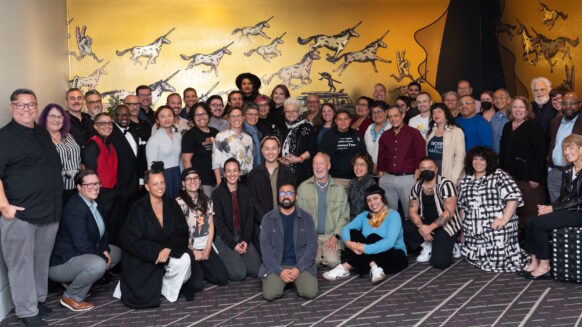
Last Saturday, November 6, at the San Francisco LGBT Community Center, the Horizons and Gill foundations jointly hosted a regional conference for major donors concerned with LGBT issues. The event featured panels of philanthropy and foundation experts who discussed strategies for giving at local and national levels. It also provided a conduit for individual donors to gather and recognize that, as experts assert, the value of LGBT philanthropy is more significant now than ever. Even was that opens the media, but the Bay Area Reporter talked with some of those who attended afterwards.

Conference attendee Jeff Lewy said, “It was a very inspiring day, the perfect counterpoint to the rest of the week, and helped bring us out of the shock. Talking about [philanthropy], knowing that as a community we’re all it it together, was very energizing.”

According to Lewy, much discussion at the event centered on the need for supporters to be strategic, focusing on long-term goals as well as short-term victories. “One of the speakers talked about working to make her children’s school LGBT-save and friendly, and establishing a curriculum so that even when her kids are no longer students, there will be ongoing support for gay and lesbian teachers, students and families,” he said.

While the conference may have been filled with energetic donors, statistics show that LGBT giving on the individual level is fairly low overall. According to a recent Horizons Foundation study, even the best funded local LGBT organizations receive donations from only one in 200 individuals. And among the 12 major regional and national organizations, only one in 900 Bay Area LGBTs give annual donations over $1,000.

‘A culture of giving’

Experts say the best way to fuel the LGBT movement for equality is to develop a “culture of giving” within the community. They point to such examples as religious organizations successfully investing large war chests by its to week and their membership the importance of the collection plate. Doughty believes gays can mobilize around a cause, pointing to the community’s response to AIDS.

“Just based on the amount of donations, time, volunteerism, and disability mobilized, we proved our community is capable of effecting change,” said Doughty. “And now we’re in a continuous campaign against those who denigrate our lives.”

Donors like Lewy feel that lesson, and the lessons learned as children, should be carried over to the gay community during adulthood. “We can apply what we’ve learned to our tribe of choice,” said Lewy. “Gay kids coming out become our children, gay seniors become our mothers and fathers.”

But many gays and lesbians tend to live in expensive parts of the country like the Bay Area, and feel that giving $1,000 a year, even to a cause they believe strongly in, is just not financially feasible. And despite marketing campaigns direct exclusively at gay and lesbian consumers, and what Cunningham calls “the myth of gay affluence,” a recent study by economist Lee Gadgett shows that as a class, LGBT people do not earn more and do not live in more affluent households that heterosexuals.

According to Doughty, “People hear the word ‘philanthropy’ and immediately think ‘Oh, that’s just for the wealthy.’ But every single gift contribution makes a huge difference. Focus of the Family and other big right-wing foundations get so much of their fuel from small, $100 donations that add up a huge way.”

Political pundits agree, pointing to the enormous numbers of small individual donations this past election year that fueled the Howard Dean and John Kerry campaigns. Progressive activists would like to see that energy now captured to help build a sustainable movement against the right.

For the individual supporter who may not have big bucks to give to their cause of choice, LGBT organizations offer myriad ways to help that don’t involve writing large checks. Most programs will work with donors to establish plants monthly giving in small amounts that will have a lower impact of individual bank accounts, and help sustain the organization. And volunteer efforts, from helping organize a fundraising event to helping deliver crucial services to sitting on the board of directors, abound.

Those who help LGBT organizations and would-be donors connect say other ways, such as estate planning, can help donors of fairly modest means make a big impact on the community as a whole.

“Often many of us have far more in assets and real estate than we do in disposable income. Those resources can be harnessed to develop a permanent resource for the community after an individual’s death,” said Doughty.

Groups like the Horizons Foundation are trying to help gays and lesbians think about and develop such ways of giving that include the community.

LGBT groups remind the community that Stonewall didn’t happen so very long ago, and that each battle fought, whether victory or defeat, has been important in creating a community that supports each one of us. Does one conference attendee, who asked to remain in office, said, “By giving what you can, your time and your energy, you don’t need to be a major donor to have a major impact.”